
What does the Sandia F-4 Crash Test Tell Us About 9/11? Not What Some People Think!

Footage of 1988 rocket-sled test.
The purpose of the test was to determine the impact force, versus time, due to the impact, of a complete F-4 Phantom -- including both engines -- onto a massive, essentially rigid reinforced concrete target (3.66 meters thick). Previous tests used F-4 engines at similar speeds. The test was not intended to demonstrate the performance (survivability) of any particular type of concrete structure to aircraft impact. The impact occurred at the nominal velocity of 215 meters per second (about 480 mph). The mass of the jet fuel was simulated by water; the effects of fire following such a collision was not a part of the test. The test established that the major impact force was from the engines. The test was performed by Sandia National Laboratories under terms of a contract with the Muto Institute of Structural Mechanics, Inc., of Tokyo. To view and download footage or still photos, click on the links or the images below.
Footage
 1.3MB .mov file 1.3MB .mov file |
2.7MB .mov file |
1.1MB .mpg file |
2.2MB .mpg file |
Images
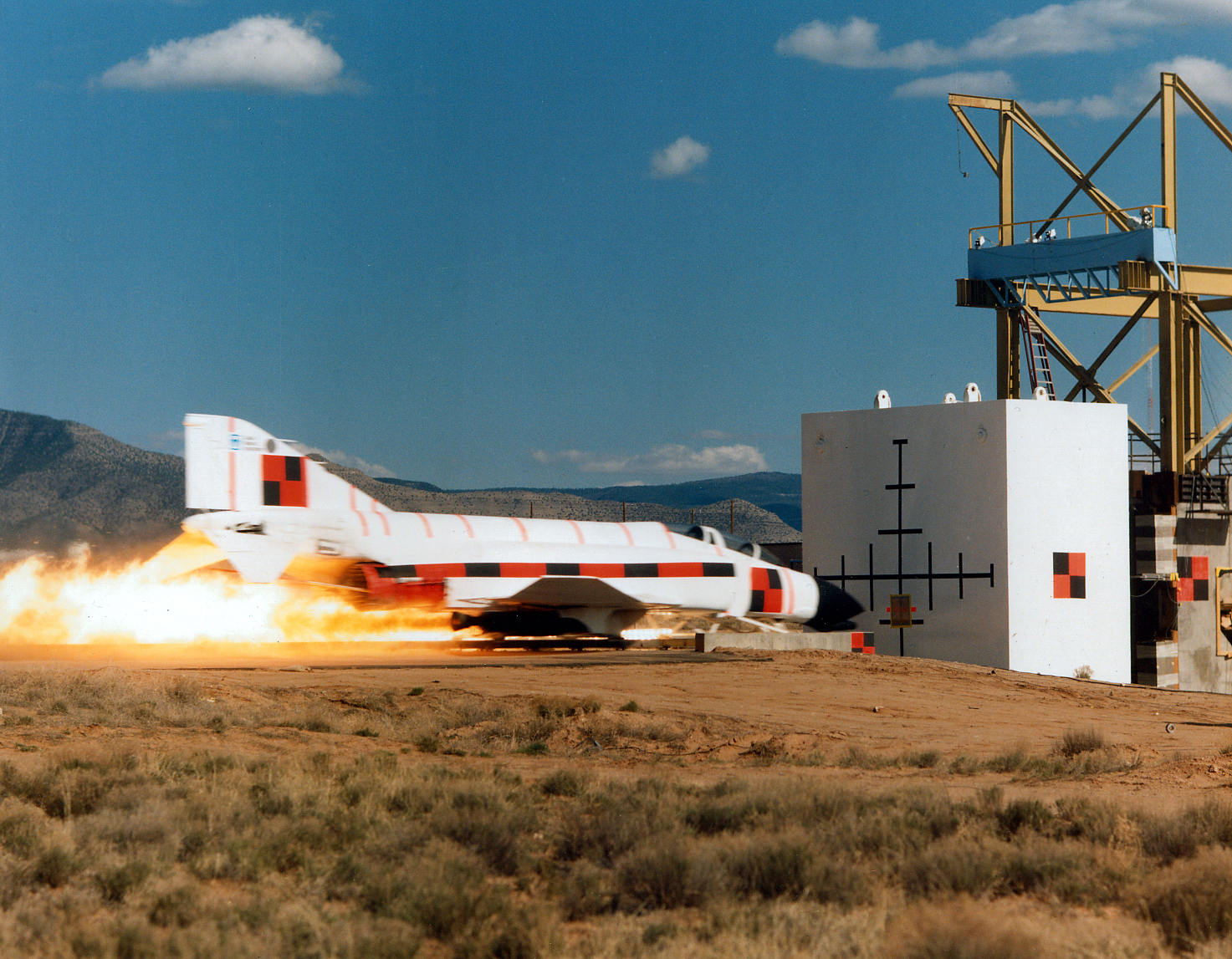 |
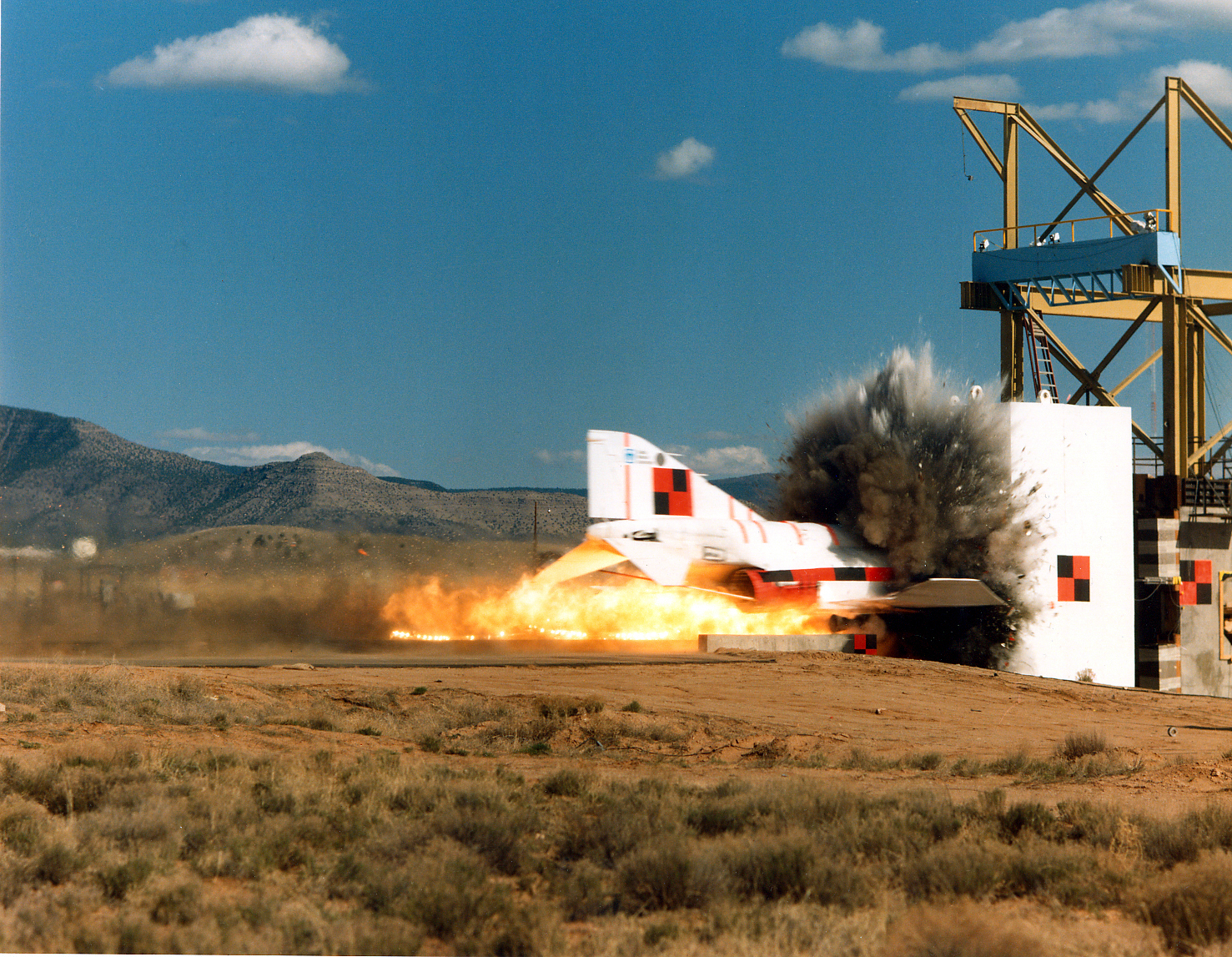 |
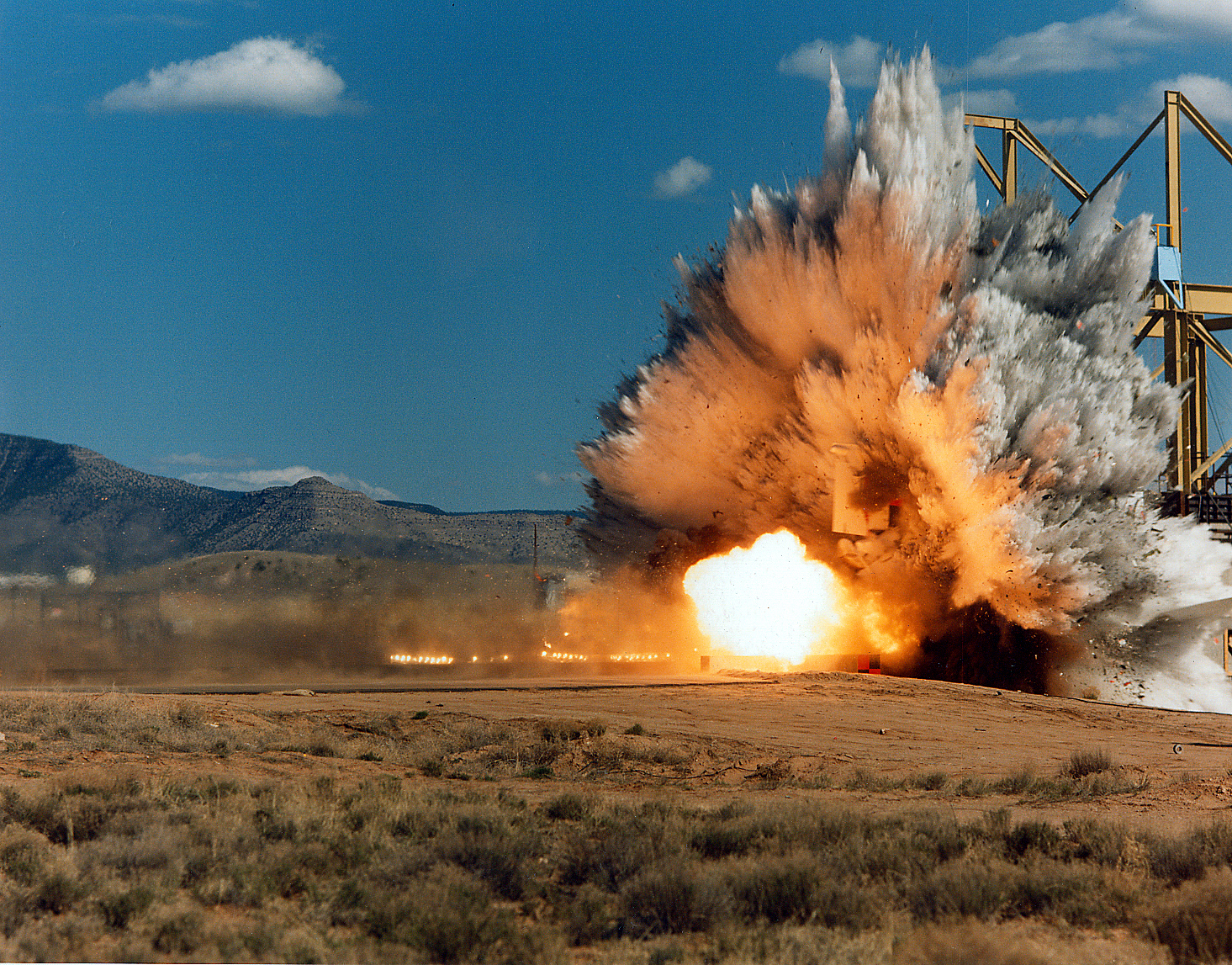 |
| f4_image1.jpg, 2MB | f4_image2.jpg, 2.2MB | f4_image3.jpg, 2.1MB |
The file footage and images offered here are large files and therefore may require 5 minutes or more to download via modem. If you need assistance, contact Candis Hoffman-Bomse at (505) 845-8604.
Sandia is a multiprogram laboratory operated by Sandia Corporation, a Lockheed Martin Company, for the United States Department of Energy under contract DE-AC04-94AL85000. With main facilities in Albuquerque, N.M., and Livermore, Calif., Sandia has major research and development responsibilities in national security, energy and environmental technologies, and economic competitiveness.
Media contact:
Larry Perrine, lgperri@sandia.gov (505) 845-8511
- gretavo's blog
- Login to post comments
comapring F-4 in test to "AA77"
"AA77"
engines: 7300 lb. X 2 = 14,600 lb.
speed 530 mph
F-4 at Sandia
engines: 3800 lb. X 2 = 7600 lb.
speed 480 mph
Forget about what became of the plane--the Pentagon was by no means a huge immobile concrete block--there should have been WAY more damage to the building, with most of the damage caused by the engines--does that sound like what we see before the collapse of the facade?
what about the target?
check out the clip at around 00:49 and you'll see that while the concrete target may be impenetrable, it is not fixed to the ground in any way, so it is pushed back by the impact. The Pentagon did not have similar "give" so in essence it it didn't have a "bend don't break" quality. The damage to the Pentagon does not seem consistent with the crash of a large Boeing at 530 mph.